Kategorie: Mars

Phoenix Lander Arrives in Florida

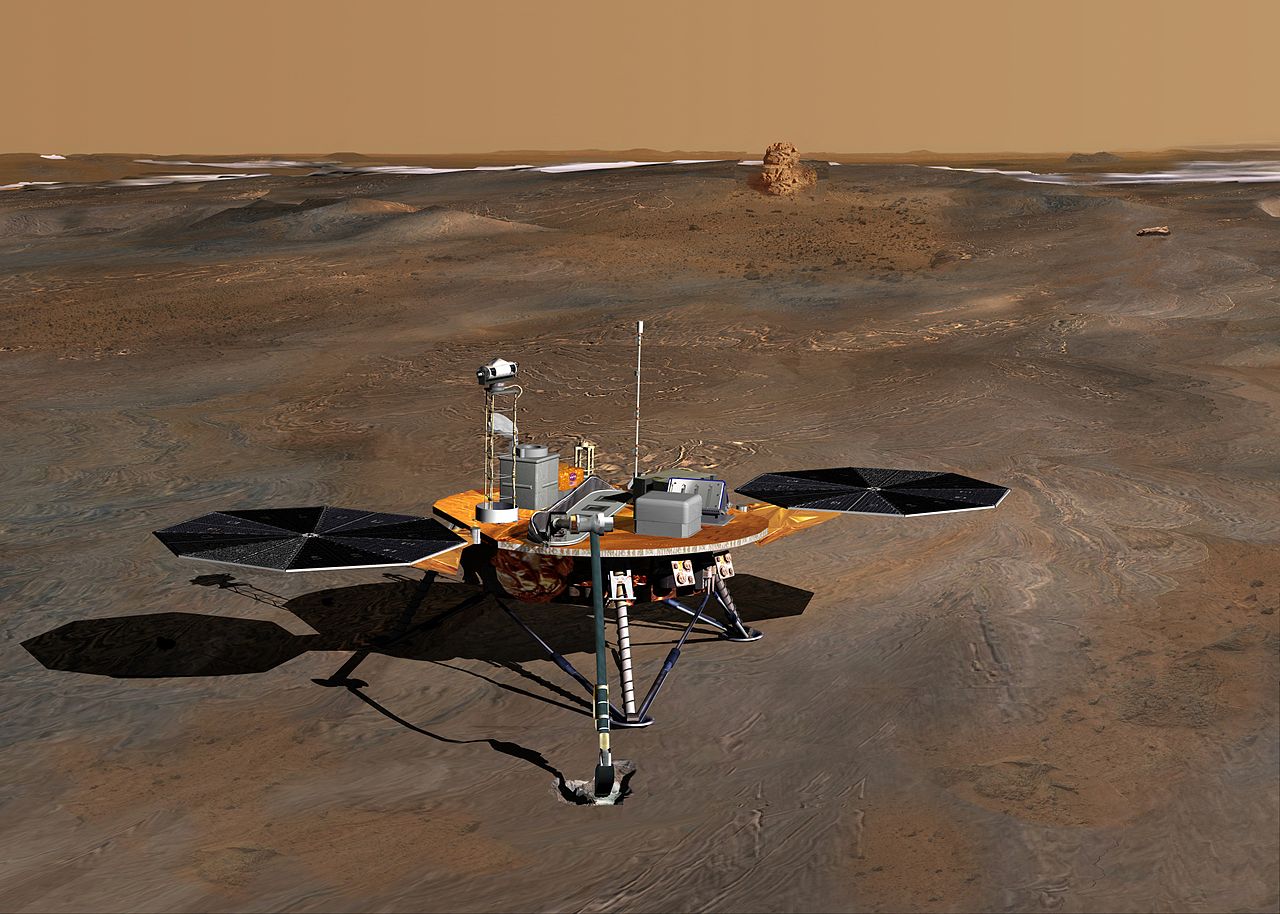
The long-lasting Mars rovers Spirit and Opportunity are still wandering across the surface of the Red Planet, but they’re about to get a new friend. Next up to land on the surface of Mars is Phoenix, which recently arrived in Florida in preparation for its upcoming launch. Phoenix was delivered by a US Air Force C-17 cargo aircraft from its manufacturer in Colorado. If all goes well, Phoenix will blast off atop a Boeing Delta II rocket as early as August 3rd, 2007. It will make a six month trip to Mars, and then land in a flat plain near the planet’s arctic ice cap. It will use its robotic digging arm and a suite of instruments to determine if the soil holds quantities of water ice. The detection of ice would bring the possibility of microbial life on Mars one step closer.
Phoenix Website
"Bumpy" ice on Mars points to active water cycle

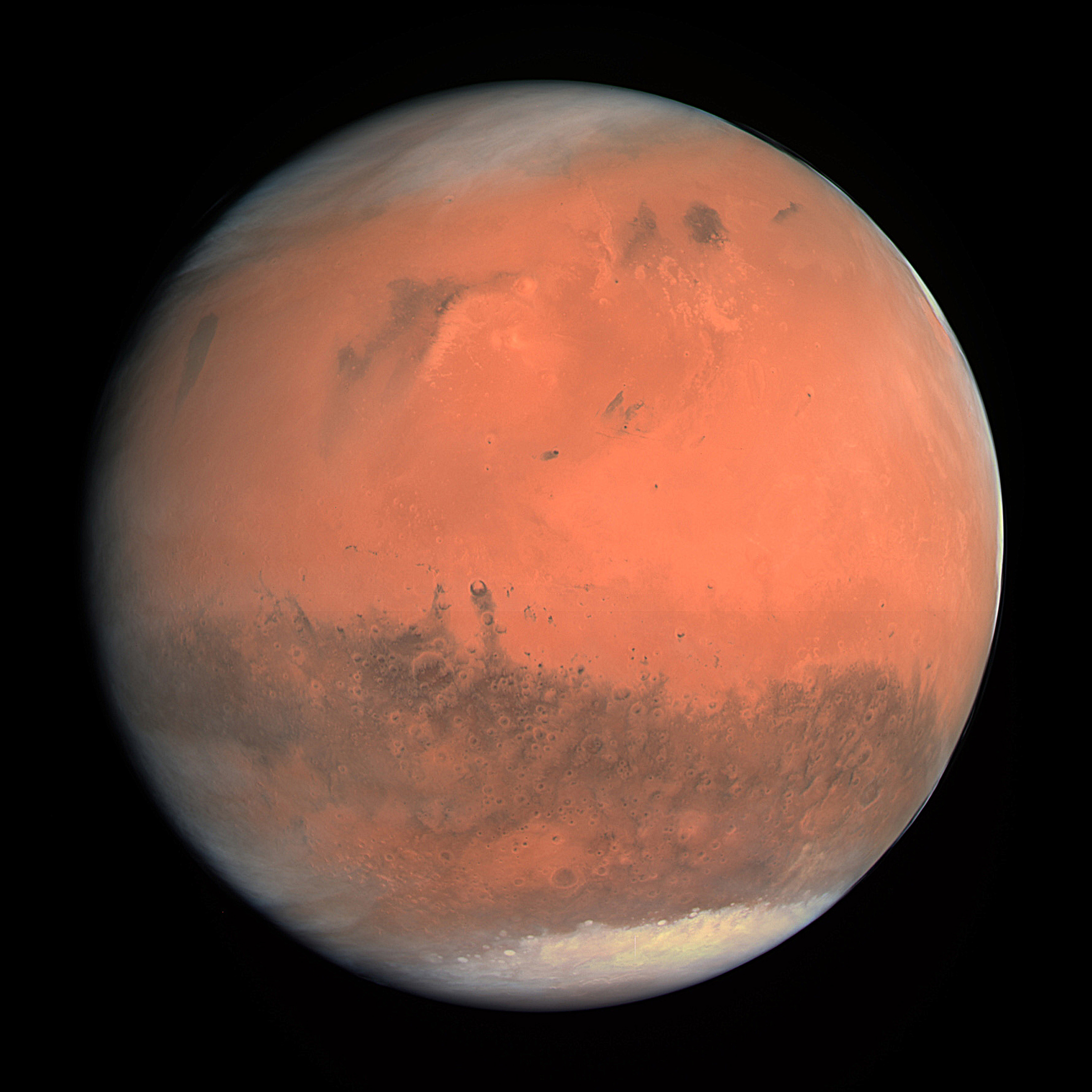
For the first time, scientists have found that water ice lies at variable depths over small-scale patches on the Red Planet. The discovery draws a much more detailed picture of underground ice on Mars than was previously available. The new results appear in the May 3, 2007, issue of the scientific journal „Nature“. The findings come from data sent back to Earth by the Thermal Emission Imaging System (THEMIS) on NASA’s Mars Odyssey orbiter.
NASA – Sharp Views Show Ground Ice on Mars Is Patchy and Variable

JPL – Sharp Views Show Ground Ice on Mars Is Patchy and Variable

Mars’s Ice Patchy, Water Cycle Quite Active, Study Reveals

Mars mineral deposits linked to groundwater

Mineral salt deposits found on the surface of Mars by one of NASA’s Mars rovers may have been created by seeping groundwater rather than an ocean, scientists reported this week. Early in its mission, the Mars rover Opportunity found deposits of sulfur-rich evaporite minerals in the Meridiani Planum region of the planet, which to scientists suggested the presence of a liquid water ocean earlier in the planet’s history. In a paper published in Thursday’s issue of the journal „Nature“, scientists said the minerals could instead have formed when volcanic activity pushed up groundwater to the surface, where it evaporated and left behind the mineral deposits found by Opportunity. The new results don’t preclude the existence of an ocean on the Martian surface in the past, only that the ocean did not extend to the Meridiani Planum region.

Nature: Not a sea, but a seep, on Mars

Surging groundwater solves Martian ‚evaporite‘ mystery

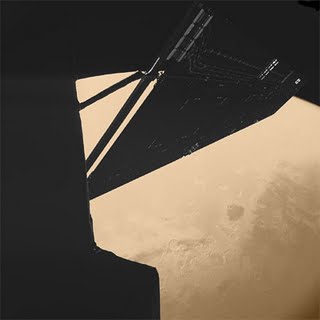
Stunning view of Rosetta skimming past Mars

mars_philae_L

Stunning image of Rosetta above Mars
taken by the Philae lander camera.
(CIVA/Philae/ESA Rosetta)

This stunning view, showing portions of the European Rosetta spacecraft with Mars in the background, was taken by the Rosetta Lander Imaging System (CIVA) on board Rosetta’s Philae lander just four minutes before the spacecraft reached closest approach to the Red Planet earlier this morning.

https://www.esa.int/About_Us/ESOC/Stunning_view_of_Rosetta_skimming_past_Mars

Underground Plumbing System Discovered on Mars

New images taken by the HiRISE camera on NASA’s Mars Reconnaissance Orbiter (MRO) show hills and plateaus with alternating layers of dark and light colored rocks in Candor Chasma, one of several canyons that make up Valles Marineris, a sprawling Martian rift valley that is longer than the contiguous United States and up to seven times deeper than the Grand Canyon. Cutting like a vertical scar across these light and dark bands in Candor Chasma are a series of linear cracks surrounded by „halos“ of light-colored bedrock. In the February 16 issue of the journal „Science“, University of Arizona researchers Chris Okubo and Alfred McEwen argue that the halos are proof that some form of fluid – either water, liquid carbon dioxide, or a combination of the two – once flowed through the bedrock. Similar processes are known to occur on Earth. Veins of gold and silver in rock, for example, are formed when water rich in the dissolved forms of these elements flows through cracks and finally deposit the metals as bright streaks in the rock.

Images showing the haloes along fractures are available on the Web at:

https://www.nasa.gov/mission_pages/MRO/news/20070215.html

Hiking maps of Mars

Don’t start packing the sandwiches just yet, but planning a hike on Mars just got a little easier. Scientists have released the first „hiking maps“ of Mars, which show the planet’s topography in the same format as Earth-based hikers‘ maps. The area covered by the maps would certainly make for good, if strenuous, hiking. It is a very rugged area near the equator called Iani Chaos. Some great views would be possible from atop one of the region’s many mesas that overlook gaping canyons hundreds of metres deep.
https://www.esa.int/Science_Exploration/Space_Science/Mars_Express/The_first_hiking_maps_of_Mars

Martian Clouds Pass By On A Winter Afternoon

NASA’s Mars Exploration Rover Opportunity captured a view of wispy afternoon clouds, not unlike fair weather clouds on Earth, passing overhead on the rover’s 956th sol, or Martian day (October 2nd, 2006). With Opportunity facing northeast, the clouds appear to drift gently toward the west in the movie taken with the rover’s navigation camera. The 10 frames, taken 32 seconds apart, show the formation and evolution of what are likely mid-level, convective water clouds.
https://photojournal.jpl.nasa.gov/catalog/PIA09170